
Case Study: How New Naval Built a Drive-Over Fuel Containment Berm with Erez Coated Fabric
Environmental Control, Flexible Storage TanksJul 8, 2021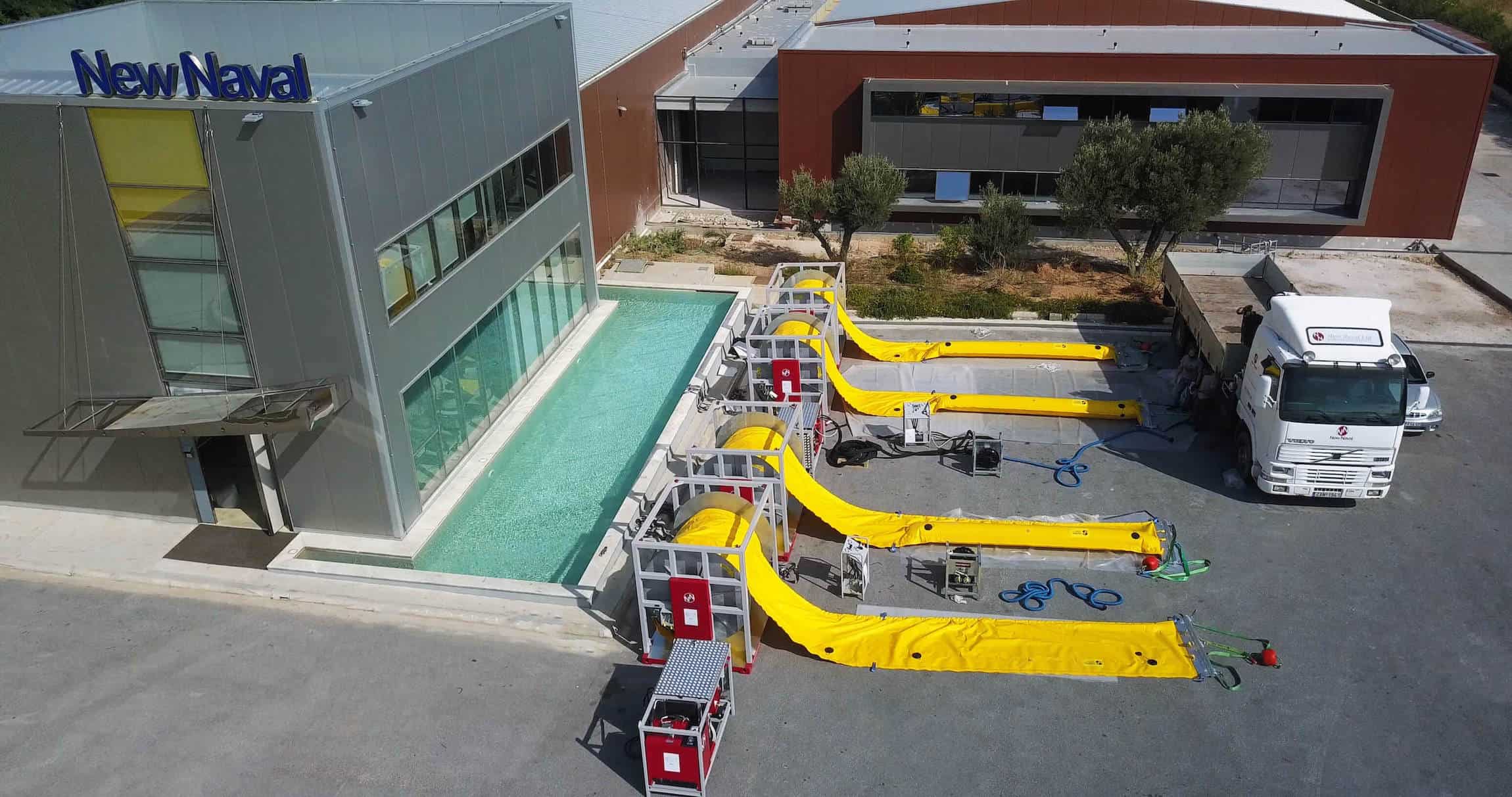
Share this Post

A fuel spill at a truck loading bay rarely starts as a major incident. A coupling leaks, a hose is disconnected a second too early, a tank is overfilled. Without containment, that fuel reaches the soil, the drains or the groundwater, and the clean-up and regulatory consequences follow.
Refineries, terminals and depots handle this risk with secondary containment: a barrier that holds a leak at the point where it happens. Where trucks load and unload, that barrier has to do something most liners never face. It has to carry the vehicle.
This case study looks at how New Naval, a Greek manufacturer of spill response equipment, built a drive-over fuel containment berm for an oil refinery, and how Erez supported the material selection.
Who is New Naval?
New Naval has designed and manufactured spill response equipment in Greece since 1978. From its 3,000 m² facility near Athens, with automated cutting and in-house HF/RF welding, the company produces oil containment booms, skimmers, temporary storage tanks, sorbents, silt and turbidity screens, and marine litter booms. Its customers include oil and gas operators, ports and terminals, coast guards and public authorities.
New Naval also runs the accredited NGP Training Center and invests in research, including the EU-funded CLAIM project on marine litter collection. Erez and New Naval have worked together for many years on coated fabrics for this equipment.
What did the refinery need?
The refinery asked New Naval to design and manufacture a custom containment berm for the area where tanker trucks load and unload fuel. Its purpose: hold any accidental leak or spill during transfer operations, before it reaches the ground.
The client supplied very little data. New Naval received two figures: the dimensions of the area to be contained and an estimate of the potential leak volume. From those, New Naval had to define the technical requirements of the berm, and deliver a heavy-duty product at a cost the refinery would accept.
New Naval brought Erez in at this stage to help define the material requirements.
What does a drive-over fuel containment berm demand from the fabric?
Three operating conditions set the specification:
- Tensile strength and abrasion resistance. Trucks drive over the berm floor and walls on every loading cycle. The fabric has to carry the wheel load and resist abrasion from tires and grit without tearing or wearing through.
- Resistance to hydrocarbons. The liner is in direct contact with fuel during a spill and with residues between spills. The coating must not degrade, swell or lose strength on hydrocarbon exposure.
- UV resistance. A loading bay is outdoors. The fabric is exposed to direct sun for its whole service life.
A fourth requirement comes from the manufacturing side. New Naval welds its products in-house, so the fabric must produce strong, consistent HF/RF welded seams. A berm is only as tight as its seams.
How was the fabric selected?
Erez worked from these operating requirements to the fabric, not the other way around. Based on the loads, the chemical exposure and the outdoor conditions, Erez determined the most suitable coated textile and supplied it to New Naval’s specification.
This is a recurring pattern in the relationship. Spill response tenders and RFQs often call for properties that sit outside a supplier’s standard catalog, and they come with short deadlines. Erez adjusts its standard grades to the specification (coating formulation, color, width and length) and returns a technical proposal quickly, while keeping the material cost compatible with a competitive bid.
What was the result?
New Naval’s proposal met the refinery’s requirements and was delivered and installed. The berm has performed in harsh operating conditions over an extended period: daily truck traffic, fuel exposure and full sun.
For New Naval, the project showed the value of involving the fabric supplier at the specification stage. For the refinery, it meant a containment solution built to its operating conditions, at the budget it set.
Which Erez fabrics are used in spill containment and response equipment?
Erez supplies coated textiles for both secondary containment and on-water spill response. Grade selection depends on the application, the liquid and the operating conditions.
| Application | Typical Erez grades | Why |
|---|---|---|
| Secondary containment and berm liners | ERcoat ER1000, ER1365 | Hydrocarbon resistance, abrasion resistance, weldable seams |
| Oil containment booms, shallow and sheltered water | Ecoat E750HT (PVC) | Lighter weight, standard for this boom class |
| Oil containment booms, open and deep water, heavy duty | REZcoat TPU 2035, 2036, 2037 | Higher strength and durability for heavier booms |
For a full comparison of boom types and materials, see our guide to oil spill containment boom materials.
FAQ
What is a fuel containment berm?
A fuel containment berm is a portable or fixed secondary containment basin, usually made of coated fabric with raised walls, placed under tanks, vehicles or transfer points to hold leaks and spills before they reach the ground.
Can trucks drive over a containment berm?
Yes, if it is designed for it. Drive-over berms use walls that fold down or compress under the wheels, and a floor fabric with the tensile and abrasion strength to carry vehicle loads.
What fabric is used for containment berm liners?
Berm liners need resistance to the stored liquid (for fuel, hydrocarbon resistance), abrasion and tensile strength, UV stability for outdoor use, and reliable welded seams. Erez grades such as ER1000 and ER1365 are commonly specified for this application.
Do oil booms and containment berms use the same fabric?
Not always. Booms work on water and need flexibility, buoyancy-chamber strength and resistance to waves and sun. Berms work on land and take vehicle loads. Some grades serve both, but the specification should start from the application. Our article on secondary containment requirements covers the regulatory side.
Planning a spill containment or spill response product? Talk to an Erez textile expert about the right grade for your application.
Related reading: Spill containment solutions: development considerations · Rubber vs TPU for oil spill booms
Share With Colleagues
Share this Post
Read More

Leave A Comment
How do you ensure the best technical textile for your product?