
Engineering the Ultimate RIB: Why Aliphatic TPU is the New Standard for High-Performance Marine Vessels
Boats, Marine SafetyMar 3, 2026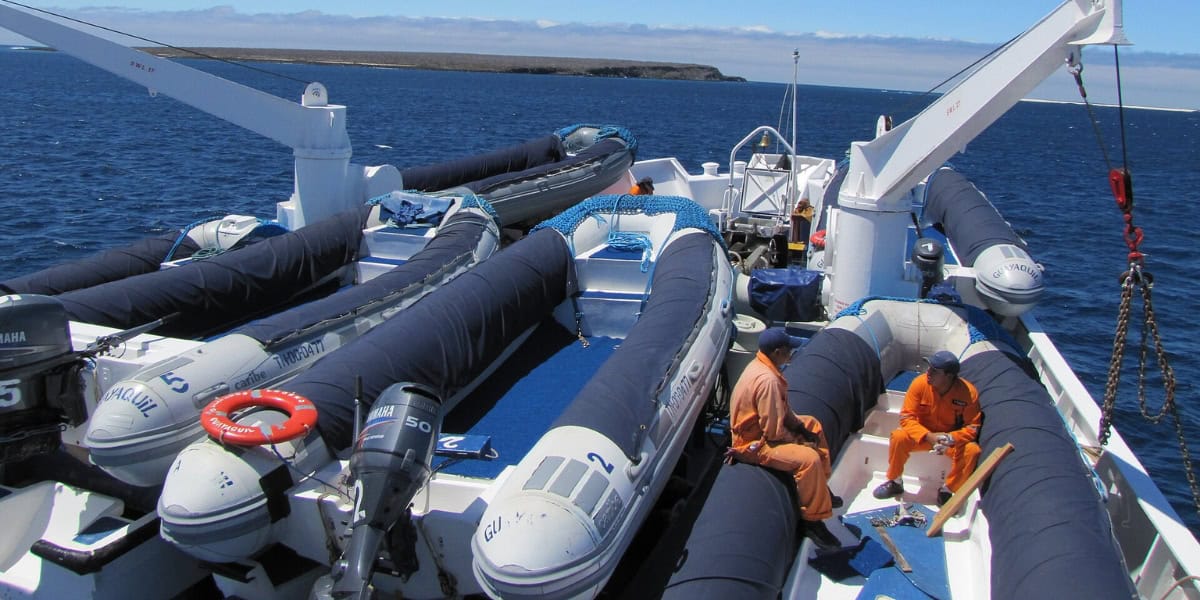
Share this Post

For decades, the marine industry relied on a binary choice: the durability of Hypalon® or the cost-efficiency of PVC. While many legacy articles still view Hypalon® as the “gold standard” for professional use, advancements in polymer engineering have introduced a superior alternative. At Erez, we believe that a RIB boat is only as resilient as its foundation. This is why we have pioneered the transition to Aliphatic TPU (Thermoplastic Polyurethane)—a material that doesn’t just match the legacy of Hypalon®, but exceeds it in every critical performance metric. This article will demonstare all the reasons why aliphatic TPU for RIBS is the right choice.
What Are Rigid Inflatable Boats (RIBs)?
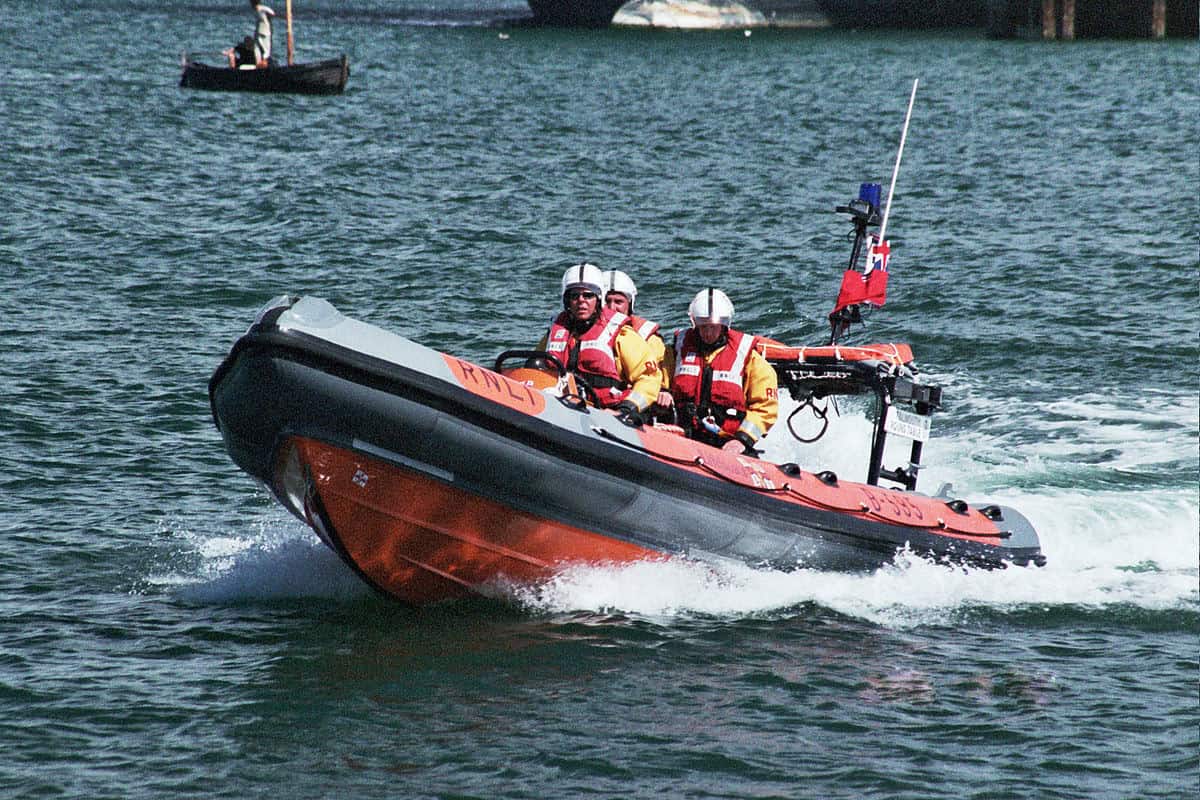
Rigid Inflatable Boats, commonly known as RIBs, combine a solid hull (typically fiberglass or aluminum) with inflatable tubes around the perimeter. This hybrid design delivers the stability and performance of a hard-hull vessel with the buoyancy, shock absorption, and safety of inflatable sponsons.
RIBs are used across a wide range of applications: commercial fishing operators value their stability in rough seas and spacious decks; coast guard and military units rely on them for high-speed rescue and interception missions; charter companies appreciate their passenger comfort and fuel efficiency; and recreational boaters choose them for their versatility and durability. Whether navigating shallow reefs for fishing expeditions or executing emergency response operations, rigid inflatable boats have become the vessel of choice for professionals and enthusiasts who demand performance without compromise.
The key to a RIB’s longevity and reliability lies in the material used to construct those inflatable tubes—and this is where material science makes all the difference.

Understanding Hypalon® and CSM: A Name That Stuck
Hypalon® is a registered trademark of DuPont (now Chemours) for their line of chlorosulfonated polyethylene (CSPE) synthetic rubber, chemically designated as CSM. The name CSM comes from its composition: ChloroSulfonated polyMethylene. Despite DuPont discontinuing Hypalon® production in 2010, the trade name became so deeply embedded in the marine industry that manufacturers, boatbuilders, and buyers continued using “Hypalon®” as a generic term for any CSM-based fabric. Today, when someone searches for “Hypalon® fabric” or “CSM tubes,” they are referring to the same material—a rubber known for its chemical resistance, UV stability, and manual-glued seam construction. Understanding this distinction is important when evaluating modern alternatives.
How to Identify Hypalon® vs TPU RIBs
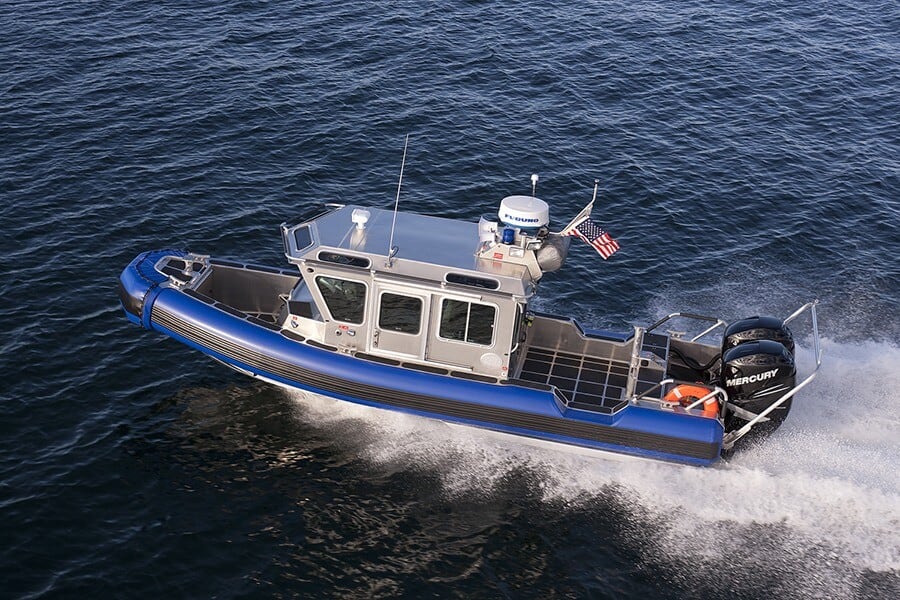
When evaluating a rigid inflatable boat—whether purchasing used or assessing your current vessel—there are clear visual and tactile differences between Hypalon® (CSM) and TPU construction. Older professional or military RIBs with a matte finish and visible manual glue lines at the seams are typically made of Hypalon®. You can often see a raised “ridge” or “bead” along the seam where adhesive was applied, and over time, these glue lines may show discoloration or slight separation. In contrast, modern Aliphatic TPU vessels feature heat-welded seams that create a smooth, flush appearance—the seam is nearly invisible because the materials have been molecularly fused together. TPU fabrics also tend to have a slightly more uniform surface texture and maintain their color consistency better over time. If you run your hand along the seam and feel a pronounced raised line or see evidence of adhesive application, you’re likely looking at a CSM/Hypalon® construction. If the seam is smooth and barely detectable, it’s probably TPU. You are now starting to understand why aliphatic TPU for RIBS is your best choice. But wait there is more.
Challenging the Status Quo: Why Aliphatic TPU Outperforms Hypalon®
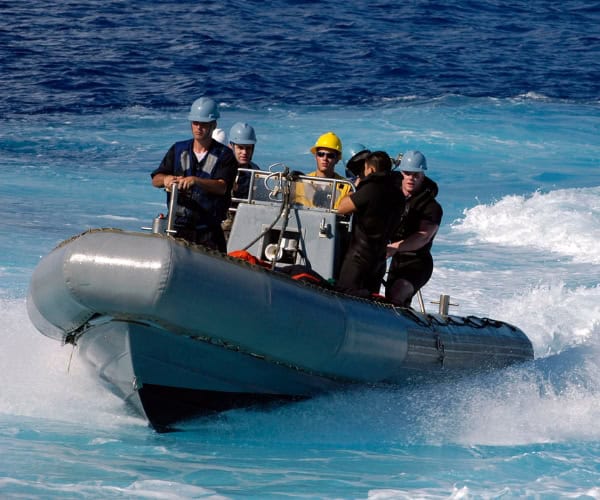
Traditional boat-building guides often claim Hypalon® is the only choice for durability. However, when we look at the engineering data, Aliphatic TPU offers three decisive advantages that legacy materials cannot match.
What is Thermoplastic Polyurethane (TPU)?
Thermoplastic Polyurethane, or TPU, is a versatile elastomer that combines the flexibility of rubber with the processing advantages of plastics. Unlike thermoset rubbers like Hypalon® (which cure permanently and cannot be remelted), TPU can be repeatedly heated, melted, and reformed without degrading its properties. This thermoplastic characteristic enables heat welding—creating molecular bonds that are impossible with traditional rubber materials. For inflatable rib boat construction, this means stronger seams, faster production, and superior long-term durability.
Seam Strength (Welded vs. Glued)
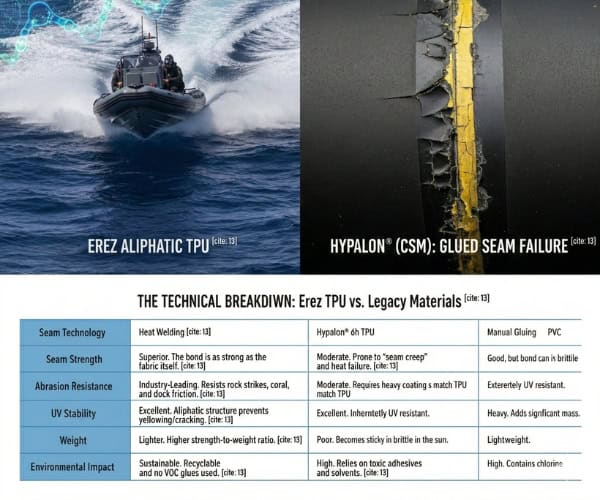
Hypalon® is a thermoset rubber, meaning it cannot be heat-melted. It relies entirely on manual gluing with toxic adhesives. These glues are a common point of failure, especially in high-heat and high-humidity environments. The bonded connection is essentially a “half-strength joint”—not a true molecular bond. Under hydrolysis (the combination of high temperature, moisture, and repeated flex cycles), these adhesive joints are prone to degradation and eventual failure.
Can You Use PVC Glue on Hypalon? This is one of the most common questions we receive from inflatable rib boat owners attempting DIY repairs. The short answer is no. PVC adhesives are chemically incompatible with Hypalon®/CSM materials. PVC glues are formulated to work with polyvinyl chloride, which has different solvent reactivity than chlorosulfonated polyethylene. Using PVC glue on Hypalon® will result in poor adhesion, seam failure, and potentially dangerous situations on the water. Hypalon® requires dedicated CSM adhesives—which are expensive, toxic, and require careful surface preparation and curing time.
Erez TPU is a thermoplastic, allowing for molecular welding (RF or Hot Air). This creates a fused bond that is effectively a single piece of material, eliminating the risk of “seam creep” or adhesive failure. Because TPU is a thermoplastic, the welding process creates a complete fusion of the coatings—making them one continuous piece—providing far greater seam strength over the vessel’s lifetime. aliphatic TPU for RIBS just makes sense when you look at these facts.
Superior Abrasion Resistance
In rigorous Taber abrasion testing, TPU consistently outperforms Hypalon®. It is significantly tougher against rock strikes, coral, and dock friction. This abrasion resistance allows for a more durable boat that can handle harsher operational environments without the need for thick, heavy layers of rubber.
The Weight-to-Strength Revolution
Because TPU is inherently stronger than Hypalon®, we can achieve superior puncture and tear resistance with a significantly lighter coating. This results in a lighter vessel that is easier to deploy, more fuel-efficient, and capable of higher top speeds without sacrificing long-term reliability.
The Production Efficiency Advantage: Time is Money
Beyond material performance, TPU offers a dramatic advantage in manufacturing efficiency that directly impacts both boatbuilders and end users:
Welding vs. Bonding: A Week vs. Hours
TPU Welding Process: A complete inflatable rib boat tube can be fabricated in approximately 2 hours using heat welding technology. The process is immediate—once welded, the seam is complete and ready for use.
Hypalon® Gluing Process: The same tube manufactured with Hypalon® requires approximately one week to complete. This extended timeline is due to the curing process—adhesives require time to fully set, bond, and reach their maximum strength. During this curing period, the vessel cannot be stressed or tested, creating production bottlenecks.
The Real-World Impact
This 35:1 time advantage translates to:
- Faster delivery times for custom orders
- Lower labor costs per vessel
- Higher production capacity without facility expansion
- Reduced work-in-progress inventory
- Better cash flow for manufacturers
For rescue operations, military units, or charter companies that need rapid deployment or repairs, the ability to fabricate or repair an inflatable rib boat tube in hours rather than days can be mission-critical.
The Technical Breakdown: Erez TPU vs. Legacy Materials
| Feature | Erez Aliphatic TPU | Hypalon® (CSM) | PVC |
|---|---|---|---|
| Seam Technology | Heat Welding | Manual Gluing | Heat Welding |
| Seam Strength | Superior. The bond is as strong as the fabric itself. | Moderate. Prone to “seam creep” and heat failure. | Good, but bond can be brittle over time. |
| Production Time | Hours (2 hours for a tube) | Days (1 week due to curing) | Hours |
| Abrasion Resistance | Industry-Leading. Resists rock strikes and dock friction. | Moderate. Requires heavy coatings to match TPU. | Low. Prone to punctures and tears. |
| UV Stability | Excellent. Aliphatic structure prevents yellowing/cracking. | Excellent. Inherently UV resistant. | Poor. Becomes sticky and brittle in the sun. |
| Weight | Lighter. Higher strength-to-weight ratio. | Heavy. Adds significant mass to the vessel. | Lightweight. |
| Environmental Impact | Sustainable. Recyclable and no VOC glues used. | High. Relies on toxic adhesives and solvents. | High. Contains chlorine and phthalates. |
Aliphatic TPU for RIBS vs. Hypalon®: The Evolution of Longevity
The UV Breakdown: Hypalon® eventually “chalks” and fades under UV exposure. Erez Aliphatic TPU features an open-chain, non-aromatic chemical structure that is inherently UV-stable. It refuses to oxidize, meaning tubes will not yellow or become brittle even after years in the equatorial sun.
Improving Air Retention for High-Speed Performance
For a high-speed interceptor or a rescue vessel, air pressure isn’t just about buoyancy; it’s about structural rigidity.
Zero-Porosity Barrier: Traditional rubber materials can have microscopic porosity. Erez TPU-coated fabrics are engineered for near-zero air loss, ensuring tubes maintain peak pressure for extended missions.
The Link to Speed: A “soft” tube increases drag. High-pressure rigidity—enabled by TPU’s superior air retention—allows a RIB to maintain its designed hydrodynamic profile, improving fuel efficiency by up to 15%.
Preventing High-Pressure Tube Fatigue
Elastic Memory: Erez Aliphatic TPU for RIBS exhibits incredible elongation at break. This “elastic memory” allows the tube to absorb massive mechanical shocks and return to its original shape without the permanent stretching (or “baggy tube” syndrome) common in older materials.
Flex-Fatigue Resistance: TPU is engineered to endure hundreds of thousands of flex cycles without delamination, maintaining structural integrity from -50°C to +70°C.
Why Aliphatic TPU is the Gold Standard for Marine Environments
For boat manufacturers, the choice between aliphatic and aromatic polyurethanes is a decision between short-term cost-efficiency and long-term marine survival. While aromatic polyurethanes are structurally reinforced by benzene rings, those very rings act as “light-traps” that cause the material to yellow, crack, and lose structural integrity under constant UV exposure.
We wrote more about this topic here.
In contrast, aliphatic polyurethanes utilize open carbon chains that are naturally transparent to UV radiation, making them the gold standard for RIB boats and marine finishes. Beyond just aesthetics, the aliphatic chemical structure offers superior resistance to hydrolysis (breakdown from saltwater) and harsh chemical spills like fuel or oil. For a manufacturer, choosing aliphatic TPU isn’t just about preventing yellowing; it’s about ensuring the hull maintains its physical toughness and abrasion resistance despite years of exposure to the punishing offshore environment.
The Industry Transition Challenge: Why the Shift to TPU Isn’t Automatic
Despite TPU’s clear technical and efficiency advantages, the marine industry’s transition from Hypalon® has been gradual. Understanding why reveals important insights about the decision-making process:
It’s Not Material vs. Material—It’s Process vs. Process
Switching from Hypalon® to TPU isn’t simply a matter of ordering a different fabric. It requires:
Equipment Investment: Heat welding machines (RF or hot-air) are necessary for TPU fabrication. While not prohibitively expensive, they represent a capital investment and require floor space.
Workforce Retraining: Skilled workers who have spent years mastering gluing techniques must learn an entirely different skill set. Welding requires different hand movements, pressure sensitivity, and quality control checks than adhesive bonding.
Process Redesign: The entire fabrication workflow changes. Hypalon® manufacturers are organized around cutting, surface preparation, adhesive application, assembly, and extended curing periods. TPU manufacturers work in a continuous flow: cutting, positioning, welding, and immediate quality verification.
Different Accessories and Attachments: Handles, D-rings, ropes, and other fittings that were traditionally glued must now be welded or attached using TPU-compatible methods. This may require redesigning certain components or attachment points.
The “It Works For Me” Mentality
Many established manufacturers have built successful businesses with Hypalon®. Their perspective: “Why invest in change when the current process is profitable?” This is understandable—but it ignores:
- The competitive advantage of faster production
- The growing customer awareness of TPU’s superior performance
- The environmental and worker safety benefits of eliminating toxic adhesives
- The long-term cost savings in labor and materials
The Knowledge Gap
Many boatbuilders we’ve spoken with readily acknowledge that Aliphatic TPU as a material is superior to Hypalon®. Many agree that aliphatic TPU for RIBS is the best choice They understand the benefits of welding over gluing. However, the practical steps to make the transition—equipment selection, supplier relationships, training programs, and process optimization—remain unclear. This is where material suppliers like Erez can play a crucial partnership role, not just providing fabric but providing transition support.
The Sustainable Shift: A Cleaner Marine Future
Because Erez TPU is weldable, we eliminate the need for the high-VOC solvents and toxic adhesives that Hypalon® manufacturing requires—resulting in a cleaner production process, safer working conditions, and a reduced environmental footprint throughout the vessel’s lifetime.
The Erez Alternative: Engineering the Future
The Erez REZcoat™ Aliphatic TPU for RIBS line represents the culmination of decades of polymer engineering expertise. By utilizing high-denier base fabrics and Polyether-based TPU formulations, we offer a material that is lighter, stronger, and more hydrolysis-resistant than traditional rubber options.
At Erez, we don’t just supply fabric; we supply the future of marine architecture. With over 40 years of field-proven success, we are ready to help you engineer the next generation of high-performance, sustainable vessels—and support you through every step of the transition.
TOPICS: Inflatable boats, TPU
Share With Colleagues
Share this Post
Read More

Leave A Comment
How do you ensure the best technical textile for your product?