
IMO & SOLAS Certified Fabrics: What Life Raft Manufacturers Need to Know
Boats, Coating, Flexible Storage Tanks, Production, WeldingJul 19, 2026
Compartir esta entrada

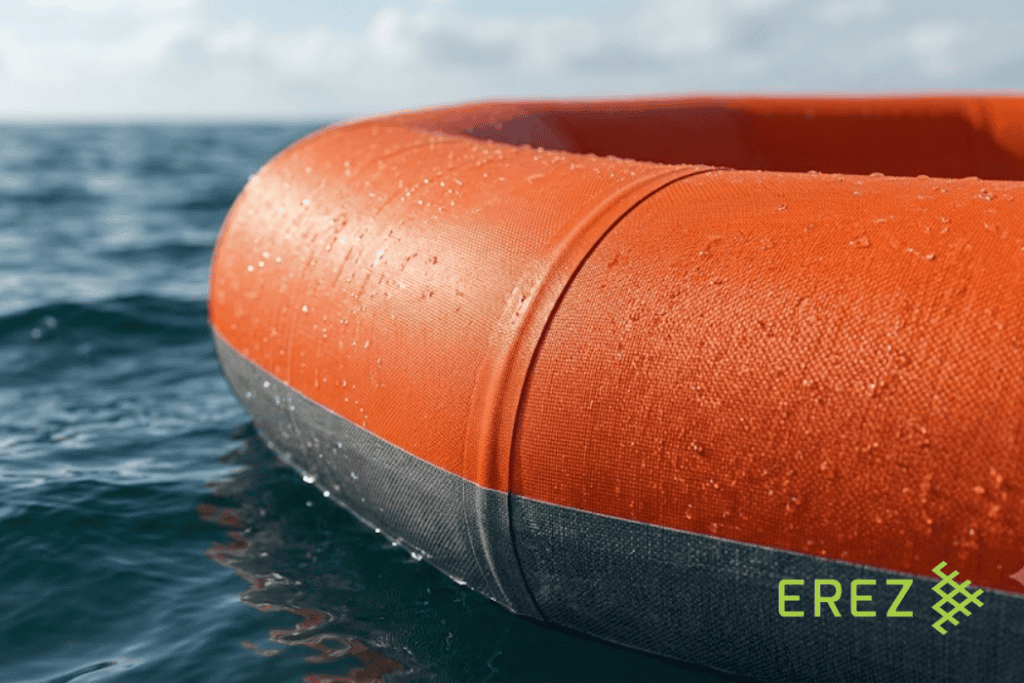
Navigating the transition from strict maritime safety standards to raw material selection is the most critical phase for product developers. For inflatable life rafts, a SOLAS approved fabric cannot simply be an off-the-shelf polymer; it must be engineered as a highly specialized IMO certified marine textile capable of surviving catastrophic failure conditions.
When evaluating technical textiles for safety craft, engineers must prioritize three core parameters to ensure survival in the field and compliance during third-party audits:
- Extreme Inflation Pressure Resilience: Just as flexible hyperbaric oxygen therapy (HBOT) chambers depend on advanced base fabrics to hold extreme, continuous atmospheric pressure without structural degradation, life raft tubes demand a high level of dimensional stability. The fabric must maintain its excellent air-holding capacity and withstand high-pressure $CO_2$ deployment forces instantly, ensuring the structure does not lose pressure over long periods.
- Environmental Compatibility Profiles: An IMO certified marine textile must endure prolonged, destructive exposure. Sourcing demands advanced formulations with high UV stability, ozone degradation protection, and robust resistance to continuous saltwater immersion, weather, oils, grease, and chemicals.
- Extreme Thermal Range Stability: Materials must maintain their mechanical properties and weld integrity across severe climate swings, resisting any physical degradation due to high temperatures on the deck or extreme sub-zero conditions.

The Sourcing Survey: Aligning Production with Certification
Selecting the right SOLAS-approved fabric early in the design phase prevents costly manufacturing re-engineering or product failure. When vetting an IMO certified marine textile, manufacturers should evaluate the following production metrics:
| Critical Operational Vector | Technical Fabric Requirement | Manufacturing Impact |
| Joining Technology Compatibility | Optimized for High-Frequency (HF) and Hot-Air welding. | Creates stronger, uniform, leak-proof seams while significantly reducing assembly time compared to manual chemical bonding. |
| Base Fabric Engineering | High-tenacity Polyester or Polyamide (Nylon) reinforced substrates. | Determines the foundational tear resistance, puncture limits, and tensile strength under heavy dynamic loads. |
| Coating Type Selection | Performance-Grade TPU, specialized PVC/alloys, or hybrid blends. | Maximizes gas retention accuracy and avoids the risk of “blocking” (sticking to itself) during extended storage periods. |
The Erez Advantage: Sourcing Certified Marine Textiles
Choosing Erez means more than just buying a roll of technical fabric; it means securing a certified partnership for your supply chain.
No Sticking, Long Lifespans: Unlike standard rubber or PVC materials that require specialty powders to prevent sticking (“blocking”) when folded on deck for long periods, Erez TPU formulations are engineered to resist heat degradation and maintain structural integrity for lifespans of up to a decade.
International Certification Compliance: Erez coated textiles are thoroughly tested and approved by major international maritime bodies, ensuring full compliance with SOLAS LSA, ISO 12402, and IMO resolutions.
Advanced Polymer Innovation: With proprietary solutions like REZcoat™, Erez leverages innovative polymer-blending technology applied to high-quality substrates, delivering superior resistance to extreme weather, chemicals, and punctures without sacrificing necessary fabric flexibility.

Ready to Verify Your Marine Supply Chain?
Don’t let a missing certificate or a failed batch audit stall your production line. Our technical team is ready to help you match your specific application requirements against the right certified polymer blends.

Compartir con colegas
Compartir esta entrada
Seguir leyendo
Deja un comentario
¿Cómo garantiza el mejor textil técnico para su producto?