
Partager cet article

A packraft is an ultra-lightweight, compact inflatable boat designed to pack down small enough to fit inside a standard backpack, letting hikers and expedition paddlers carry it in on foot to remote waterways. Packraft manufacturers work within a narrower margin for error than most other inflatable boat builders. A packraft has to survive whitewater, rocks, and repeated pack-and-unpack cycles, while staying light enough for one person to carry for miles. The fabric choice, more than any other design decision, determines whether a boat meets that standard. Two materials dominate the market: thermoplastic polyurethane (TPU) coated nylon and PVC coated fabric. Choosing between them affects weight, durability, cold-weather performance, and long-term reliability.
What a Packraft Fabric Actually Needs to Do
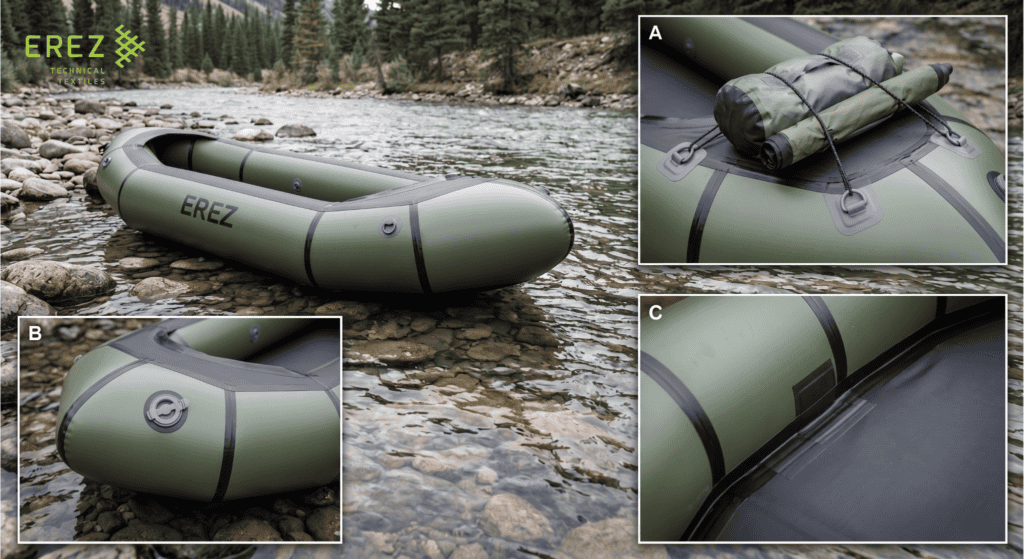
Before comparing coatings, it helps to define the job. Packraft fabric needs to be:
- Airtight and waterproof under sustained internal pressure
- Abrasion and puncture resistant against rocks, gravel, and repeated dragging
- Weldable, so seams can be heat-sealed without stitching or adhesive
- Flexible at low temperatures, since packrafts are often used in cold, remote environments
- Lightweight relative to strength, since every gram is carried on the packer’s back
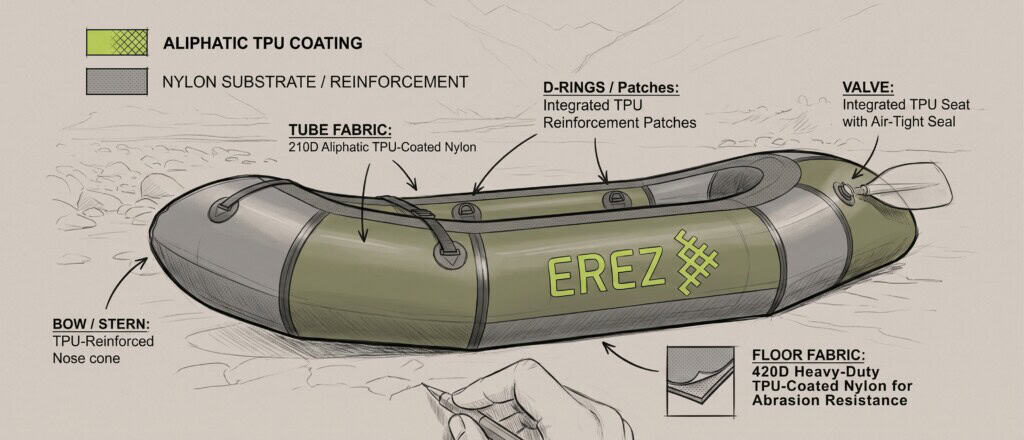
Most serious packraft manufacturers build around 210D to 420D coated nylon, balancing weight against tear strength depending on whether the boat is designed for calm-water touring or whitewater use.
TPU Coated Fabric for Packrafts
TPU-coated nylon is the standard choice among established packraft manufacturers, and for good reason. TPU offers:
- Superior tear and puncture resistance against sharp impacts like river rocks, which is typically the failure mode that ends a packraft’s field life
- Better low-temperature flexibility, so the material doesn’t stiffen or crack in cold conditions common on expedition and backcountry trips
- Lighter weight per unit strength, which matters directly to a product category defined by portability
- Reliable heat-weldability, allowing clean, strong seams without the thicker seam profile PVC often requires
- Aliphatic TPU options that resist UV yellowing and color degradation over years of sun exposure, unlike aromatic TPU or PVC
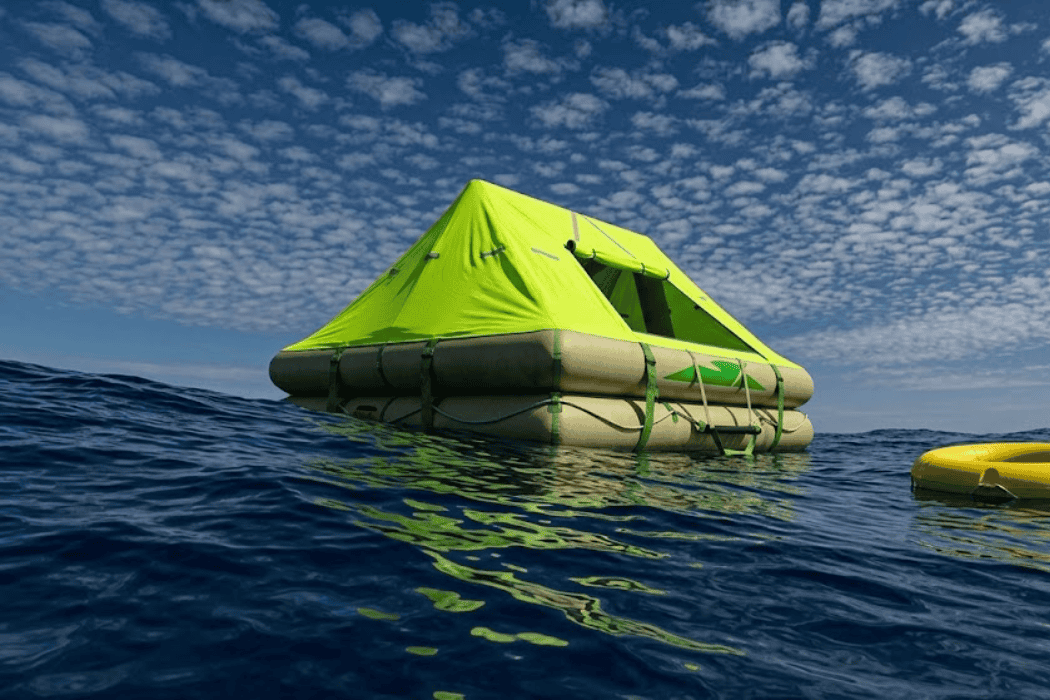
These properties are the same reasons TPU has become the standard for RIB collars and life raft bladders. The application changes, but the underlying material logic does not.
PVC Coated Fabric for Packrafts
PVC remains in the market primarily because of cost. It is less expensive to produce and source than TPU, which keeps entry-level packrafts more affordable. The trade-offs are well documented among manufacturers and experienced users alike:
- Heavier than TPU for a comparable strength rating, working against the core packraft design goal
- Loses flexibility in cold temperatures, becoming stiff or brittle in conditions where many packrafts are actually used
- More prone to tearing or cracking on sharp impacts, such as a direct hit against a river rock, even though it holds up well to flat-surface scraping
- Less consistent long-term UV stability, depending on formulation
PVC does have a genuine advantage worth noting: its stiffness gives the floor better rigidity, resisting the sag (“tacoing”) that can occur on a lightweight, unpressurized TPU floor under a paddler’s weight.
For manufacturers targeting the performance or expedition segment of the market, these limitations generally outweigh the cost savings. PVC still has a place in budget-tier or recreational packrafts where price sensitivity outweighs performance requirements.
Are there any benefits of PVC vs. TPU for packrafts?
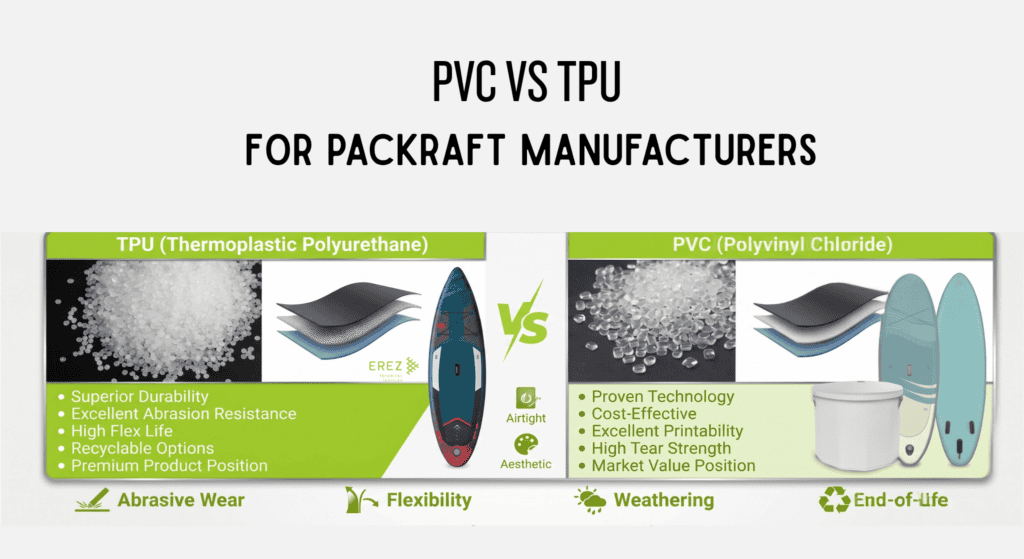
PVC offers a lower material cost and a stiffer, more rigid floor that resists sagging under a paddler’s weight, while TPU offers significantly lower weight, better packability, and stronger resistance to tearing and puncturing on sharp impacts. Both are legitimate choices, and the right one depends on which trade-off matters more for the boat’s intended use.
Where PVC packraft fabric holds the advantage:
- Cost. PVC is meaningfully cheaper to produce and buy, which is why it shows up most often in entry-level and budget-focused packrafts.
- Floor rigidity. PVC is naturally stiffer and holds a higher air pressure without stretching. On a packraft, this keeps the floor flatter under the paddler’s weight instead of sagging or “tacoing” upward, which helps the boat track straighter and glide more efficiently.
- Flat-surface abrasion resistance. PVC handles sustained scrape wear, like dragging over gravel or a flat riverbed, reasonably well.
Where TPU packraft fabric holds the advantage:
- Weight and packability. TPU-coated nylon can weigh 30 to 50 percent less than PVC at comparable strength and pack down significantly smaller, which matters directly for a boat that’s carried on foot.
- Tear and puncture resistance. This is the distinction that matters most in the field: PVC resists flat scraping but is more prone to cracking or tearing under a sudden, sharp impact, while TPU’s elasticity lets it stretch and absorb the hit from a sharp rock without tearing. For whitewater or rock-strewn rivers, this failure mode, not flat abrasion, is usually what ends a boat’s life early.
- Cold weather flexibility. TPU remains elastic in freezing conditions, whereas PVC can stiffen or become brittle.
- Environmental impact. PVC relies on chemical plasticizers that leach out over time and is difficult to recycle due to its chlorine content. TPU does not require these additives and is significantly easier to recycle.
Neither material is simply “better.” PVC is a sound choice when cost and floor rigidity are priorities, such as for a first boat or a casual flatwater packraft. TPU is the choice manufacturers reach for when weight, packability, and resistance to sharp-impact damage define the product, which is why it’s become the standard for expedition and whitewater-focused packrafts.
Compliance and Certification specification for TPU vs PVC packraft fabric
Packraft fabric intended for commercial manufacturing, particularly for sale into the EU, should meet REACH requirements as a baseline, regardless of coating type. Manufacturers building toward broader inflatable boat standards, including ISO 6185-1, should confirm their fabric supplier can document compliance rather than relying on general marketing claims. This is an area where sourcing from an established technical textile manufacturer, rather than a generic trading company, makes a measurable difference during audits or certification review.
Specifying the Right Fabric for Your Packraft Line
The right choice depends on where a given product sits in the lineup:
| Use case | Recommended approach |
|---|---|
| Expedition / whitewater packrafts | Aliphatic TPU coated nylon, 210D-420D depending on tube vs. floor application |
| Touring / recreational packrafts | TPU coated nylon, lighter denier for weight optimization |
| Budget / entry-level packrafts | PVC coated fabric, with performance trade-offs clearly understood |
Denier, coating weight, and finish should be specified based on the specific tube, floor, or seat application rather than applied uniformly across the whole boat, since requirements differ by component.
Why Manufacturers Source TPU Fabric from Erez
Erez has supplied coated technical textiles to inflatable boat manufacturers for over 30 years, including RIB builders, life raft manufacturers, and raft producers like SOTAR. The same aliphatic TPU coating technology used in our RIB and marine safety fabrics is available in the lighter weights and deniers packraft manufacturers need, with the compliance documentation required for commercial and international distribution.
To discuss denier, weight, and coating specifications for your packraft line, schedule a call with our technical textile team.

TOPICS : Bateaux pneumatiques, TPU
Partager avec les collègues
Partager cet article
Lire la suite
Laisser un commentaire
Comment garantir le meilleur textile technique pour votre produit ?