
Partager cet article

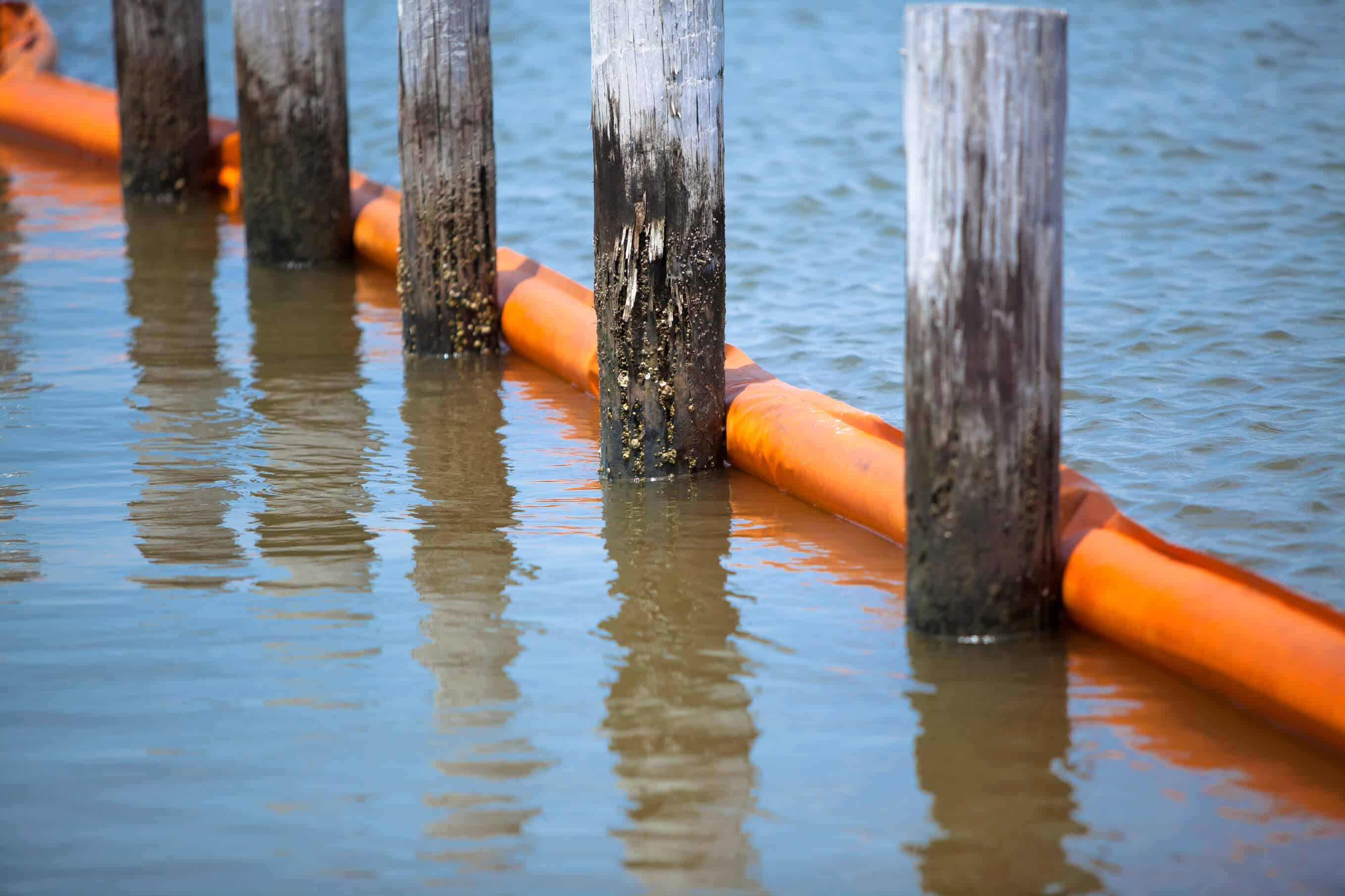
Synthetic rubber has been the default skin for offshore oil booms for more than 20 years. Polyurethane (TPU) coated fabric now does the same job with a different set of strengths: it is welded instead of vulcanized, it repairs in the field, and it is lighter for a boom of the same size. This article compares the two on the points that matter to a boom manufacturer and to the port or response company that will deploy the boom.
Why has rubber been the standard for oil booms?
Synthetic rubbers such as Hypalon (CSM) and neoprene earned their place through decades of field use. Inflatable rubber booms are familiar to response teams, and many tenders are still written around them. Rubber offers:
- Resistance to seawater and hydrocarbons
- UV resistance for open-water use
- Good performance in rough water
- Compact storage on reels
Where does rubber fall short?
Production. Rubber boom fabric must be vulcanized, an energy-intensive process, and seams are joined with solvent-based adhesives. Both add cost and expose workers to hazardous chemicals.
Repair. A damaged rubber boom is hard to repair in the field. In most cases it is retrieved, replaced with a spare section to keep containment in place, and sent back to the workshop.
What does TPU change?
TPU-coated fabric keeps the properties that made rubber the standard and changes how the boom is built and maintained:
- Welded seams. TPU is joined by high-frequency (HF/RF) or hot-air welding. Seams are consistent, airtight and made without solvent adhesives.
- Field repair. A patch can be welded on site, so a damaged section returns to service faster.
- Lower weight. For a boom of similar size, TPU fabric is lighter, which makes deployment, handling and storage easier.
- Abrasion and cold-crack resistance. Important for booms that are dragged over decks and reels and deployed in cold climates.
- Air retention. Welded TPU chambers hold pressure well, which suits inflatable booms.
Rubber vs TPU at a glance
| Synthetic rubber (e.g. Hypalon) | TPU-coated fabric | |
|---|---|---|
| Seawater and hydrocarbon resistance | Yes | Yes |
| UV resistance | Yes | Yes |
| Joining method | Vulcanizing, solvent adhesives | HF/RF or hot-air welding |
| Field repair | Difficult, usually back to workshop | Welded patch on site |
| Weight for a similar boom | Heavier | Lighter |
| Abrasion resistance | Good, depends on the compound and thickness | High, depends on the grade and coating weight |
| Cold-crack resistance | Varies by compound | Stays flexible in cold conditions, varies by grade |
| Track record | 20+ years as the offshore standard | Growing, used by leading boom makers |
Abrasion and cold-crack performance depend on the specific grade, coating weight and boom design. Contact Erez for test data on the grade you are considering.
What about cost?
The purchase price of a boom depends on its design and size. Over the life of the boom, TPU’s welded construction, field repairs and lower handling weight can reduce the cost of maintaining it, because damaged sections return to service faster and handling takes less effort. Actual lifespan depends on how the boom is used, stored and maintained. For a lifecycle and cost comparison for your boom design, talk to an Erez textile expert.
Which Erez TPU grades are used for oil booms?
Erez supplies REZcoat TPU 2035, 2036 and 2037 for heavy-duty inflatable booms in open and deep water. Each grade can be adjusted in coating weight, color and width to the boom design. For lighter booms and sheltered water, see the full material table in our guide to oil spill containment booms.
When is rubber still specified?
Some tenders name rubber explicitly, because the end user has years of experience with it, or because existing stock, spare parts and repair procedures are built around it. A manufacturer with vulcanizing lines and a large rubber inventory may also stay with rubber for continuity. In those cases, the conversation about TPU starts with the end user: showing the port or response company what welded seams, field repair and lower weight mean for their operation.
So which should you choose?
Both materials work in the field. The decision depends on the water conditions, the customer’s tender, your production method and how the boom will be maintained. For manufacturers who weld, and for customers who value field repair and lighter handling, TPU is the stronger choice.
FAQ
What is Hypalon?
Hypalon is a brand name for chlorosulfonated polyethylene (CSM), a synthetic rubber used for inflatable boats and oil booms.
Can TPU booms be repaired at sea?
A TPU boom can be repaired by welding a patch on site with portable hot-air equipment, depending on the damage.
Is TPU suitable for inflatable booms?
Yes. Welded TPU chambers are airtight and keep their pressure, which is why TPU is used for inflatable booms and other air-holding products.
Comparing materials for your next boom tender? Talk to an Erez textile expert.
Related reading: Oil spill containment booms: types and materials · Case study: New Naval
Partager avec les collègues
Partager cet article
Lire la suite

Laisser un commentaire
Comment garantir le meilleur textile technique pour votre produit ?